Christmas Light Installation Business Starter Gear 2026
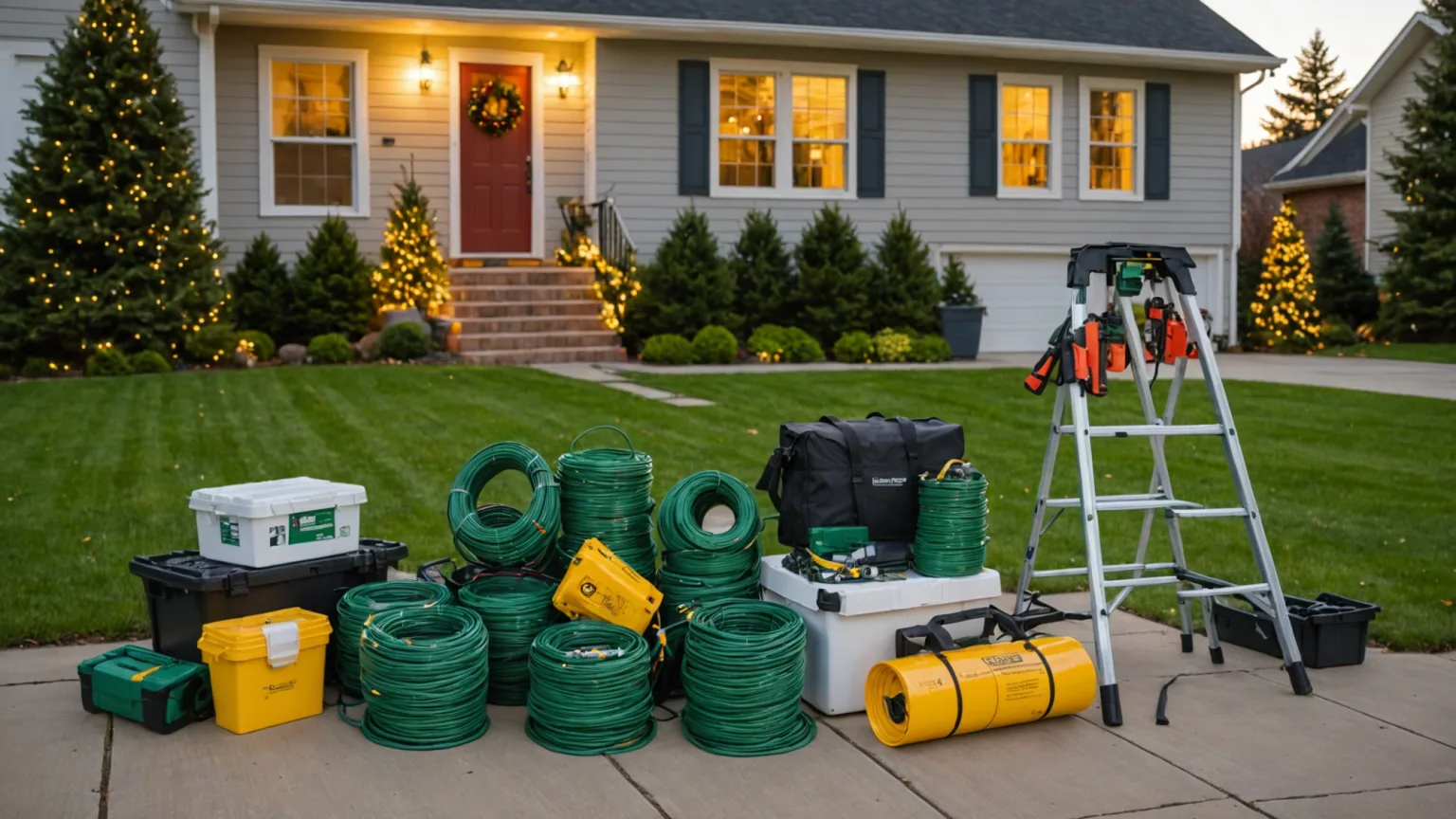
The commercial starter kit for launching a holiday-light install side business — C9 spool systems, bulk LED bulbs, clips, a rated ladder, and OSHA-grade fall protection.
This article contains affiliate links. If you purchase through these links, we may earn a commission at no extra cost to you. Learn more.
Quick picks from this guide
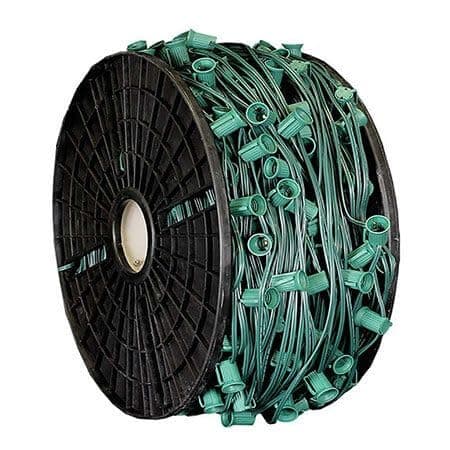
Pro Christmas C9 Cord
This is the workhorse spool for the tight, premium roofline most homeowners picture when they pay for a professional install.
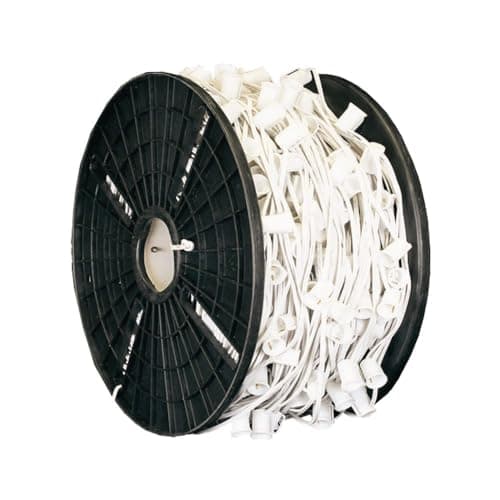
Pro Christmas C9 Cord
Same 500-foot cord, half the sockets: this spool publishes 500 sockets, which works out to about 12-inch spacing (derived).
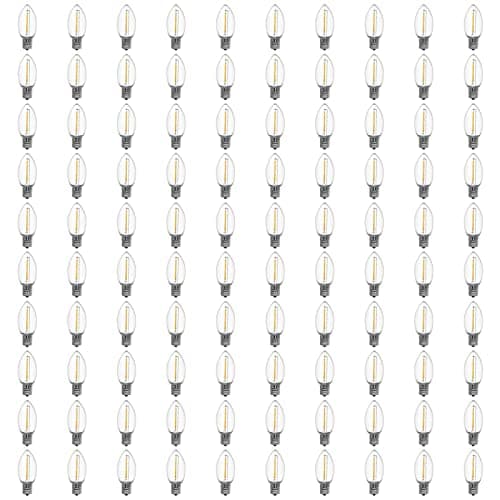
Meconard C9 LED Replacement Bulbs
A spool is only sockets until it has bulbs, and buying in bulk is what makes the system economical over multiple seasons.
Brightown All-in-One Light Clips
Clips are the unglamorous line item that decides how fast a job goes.
UQM C9 Magnetic Light Clips
The second clip type covers the roofs the all-in-one clips can't.
Little Giant Velocity 22-ft Multi-Position Ladder
A 22-foot multi-position ladder is the reach tool that makes second-story rooflines workable, adapting to uneven ground and stair-step appr…
| Role | Product | ~Price | Best For |
|---|---|---|---|
| Primary spool (dense) | Pro Christmas C9 500 ft · 1000 sockets | ~$324.00 | Premium, closely-spaced runs |
| Economy spool | Pro Christmas C9 500 ft · 500 sockets | ~$248.00 | Budget coverage (stock scarce) |
| Bulk LED bulbs | Meconard C9 LED — 100 pack | ~$79.99 | Filling and re-lamping sockets |
| Clips — all-in-one | Brightown 200-pack | ~$54.99 | Shingles and gutters (stock scarce) |
| Clips — magnetic | UQM C9 magnetic — 100-pack | ~$35.99 | Metal roofs and steel gutters |
| Ladder — primary | Little Giant Velocity 22 ft | ~$369.00 | Reach (listed future-dated — see below) |
| Fall protection | Guardian 00815 Rooftop Kit — 50 ft | ~$96.00 | Non-negotiable rooftop safety |
A holiday-light installation side business is priced on labor and reliability, so the starter kit is really contractor-grade inventory plus the safety equipment that keeps the operator on the job. That reframes what "starter gear" means: not a cart of consumer decorations, but bulk commercial cord, replaceable bulbs, install-quantity clips, a rated ladder, and fall protection. Everything below is chosen with that single idea in mind.
The timing is simple. A first-season crew tools up in July and August so the gear is on the shelf before the Sept–Nov install rush, when the exact commercial spools, clip packs, and ladders start selling through. This guide covers the wired-C9 route — dense bulk cord and physical clips. If the plan is animated or addressable displays instead, start with the pixel light show starter guide, which is a different toolkit entirely.
The kit is built around eight commercial SKUs and a transparent, price-variable basket that lands near $885 all-in with a new ladder, or closer to $515 for a crew that already owns one. On format: this guide sticks to professional C9 spool systems, not the pre-assembled consumer strings in the C9/C7 commercial Christmas lights roundup — zero SKU overlap, because a business buys cord and bulbs separately.
Quick Comparison
| Role | Product | ~Price | Best For |
|---|---|---|---|
| Primary spool (dense) | Pro Christmas C9 500 ft · 1000 sockets | ~$324.00 | Premium, closely-spaced runs |
| Economy spool | Pro Christmas C9 500 ft · 500 sockets | ~$248.00 | Budget coverage (stock scarce) |
| Bulk LED bulbs | Meconard C9 LED — 100 pack | ~$79.99 | Filling and re-lamping sockets |
| Clips — all-in-one | Brightown 200-pack | ~$54.99 | Shingles and gutters (stock scarce) |
| Clips — magnetic | UQM C9 magnetic — 100-pack | ~$35.99 | Metal roofs and steel gutters |
| Ladder — primary | Little Giant Velocity 22 ft | ~$369.00 | Reach (listed future-dated — see below) |
| Fall protection | Guardian 00815 Rooftop Kit — 50 ft | ~$96.00 | Non-negotiable rooftop safety |
The Velocity ladder was listed with a future availability date at capture, so an in-stock alternative is covered in the ladder section. The economy spool and the all-in-one clips were both marked in stock but scarce — order those two early.
The Starter Kit, Piece by Piece
1. Pro Christmas C9 Cord — 500 ft, 1000 Sockets (Primary Spool)
ASIN: B0DB5Q1Q73 | Price: ~$324.00 | View on Amazon

This is the workhorse spool for the tight, premium roofline most homeowners picture when they pay for a professional install. The listing publishes 500 feet of cord with 1000 sockets — which works out to roughly 6-inch socket spacing (derived). Closer sockets mean a denser line of light with no dark gaps, and that density is much of what separates a paid install from a homeowner's own strings. Because it ships as bare cord, the operator buys bulbs separately and re-lamps sockets over the years instead of discarding failed pre-made sets.
Pros:
- 1000 sockets on 500 ft for a dense, gap-free light line (≈6-in spacing, derived)
- Bare-cord system: re-lamp instead of discarding failed strings
- Marked in stock at capture
Cons:
- Highest spool price of the two, at about $324
- Bulbs are a separate purchase
- Dense spacing means 1000 sockets to fill per spool
2. Pro Christmas C9 Cord — 500 ft, 500 Sockets (Economy Spool)
ASIN: B0DB5RSHSJ | Price: ~$248.00 | View on Amazon

Same 500-foot cord, half the sockets: this spool publishes 500 sockets, which works out to about 12-inch spacing (derived). That wider spacing reads as a cleaner, more traditional roofline, costs less up front, and fills with half as many bulbs per foot — which is why the economy spool is often the smarter first buy, with the denser spool added once recurring premium clients justify it. One caveat on stock: this spool was listed in stock but scarce, so it may sell out; confirm current availability before building a job around it.
Pros:
- Lowest spool price here at about $248
- ≈12-in spacing (derived) suits a clean, traditional roofline
- Uses fewer bulbs per foot than the 1000-socket spool
Cons:
- Listed in stock but scarce — may sell out; confirm before ordering
- Wider spacing shows more gap between bulbs
- Still bare cord; bulbs bought separately
3. Meconard C9 LED Replacement Bulbs — 100 Pack (Bulk Bulbs)
ASIN: B0C1YX1HMH | Price: ~$79.99 | View on Amazon

A spool is only sockets until it has bulbs, and buying in bulk is what makes the system economical over multiple seasons. This 100-pack of C9 LED replacement bulbs is the re-lamping inventory, and low LED draw matters for how many runs share a circuit. The guide claims only what the listings state: the spools are C9 light cord with C9 sockets and this pack is C9 LED replacement bulbs, so both are C9-format — but confirm base and voltage on the live listings before bulk ordering, since a brand-to-brand match is not published. Filling 1000 sockets takes more than one pack, so buy to match the spool chosen.
Pros:
- C9-format LED bulbs for re-lamping C9 sockets
- Listed at 0.6 W per LED bulb against the 4W–7W incandescent equivalents the listing cites
- Sold in a 100-pack for bulk inventory
Cons:
- One 100-pack won't fill a 1000-socket spool
- Confirm base and voltage on the live listings first
- An add-on cost on top of the bare cord
4. Brightown All-in-One Light Clips — 200 Pack
ASIN: B08CZWDK9D | Price: ~$54.99 | View on Amazon

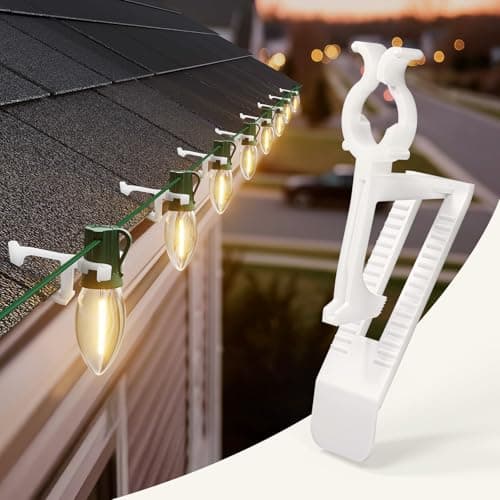
Clips are the unglamorous line item that decides how fast a job goes. This 200-pack of all-in-one clips is the default for standard roofs — shingles and gutters — where a push-in clip can bite onto the edge, and having them staged means a crew is fastening cord rather than driving to a hardware store mid-job. Availability is the thing to watch: this pack was in stock but scarce, so it may sell out; buy it with the spools. Two hundred clips is a starting supply, not a season's worth for a busy crew.
Pros:
- 200 clips for shingle and gutter mounting on standard roofs
- Install-quantity pack keeps a crew moving
- Pairs with the magnetic pack to cover shingle, gutter, and metal-surface jobs
Cons:
- In stock but scarce — may sell out; buy early
- 200 count is a starter supply, not a full season
- Push-in clips won't bite on metal roofs
5. UQM C9 Magnetic Light Clips — 100 Pack
ASIN: B0DDH1SY9J | Price: ~$35.99 | View on Amazon

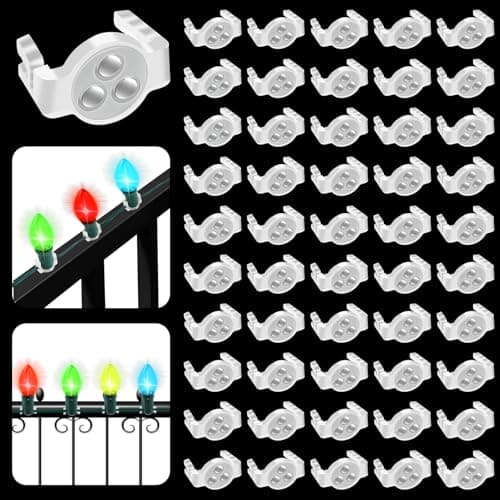
The second clip type covers the roofs the all-in-one clips can't. These are 100 magnetic C9 clips for metal roofs, standing-seam panels, and steel gutters — surfaces where a push-in clip has nothing to grip and a magnet does the holding. A crew carrying both clip types can quote a metal-roof house without turning the job away. The two-clip logic is worth stating plainly: all-in-one clips for shingles and gutters, magnetic clips for metal — keep both in the truck and match the clip to the roof on arrival.
Pros:
- Magnetic hold for metal roofs and steel gutters
- Lets a crew take metal-roof jobs the push-in clips can't
- Lowest-cost line item in the kit at about $36
Cons:
- 100-count is smaller than the all-in-one pack
- Magnets only help on ferrous surfaces
- Not a substitute for push-in clips on shingles
6. Little Giant Velocity 22-ft Multi-Position Ladder
ASIN: B071XFBHCT | Price: ~$369.00 | View on Amazon

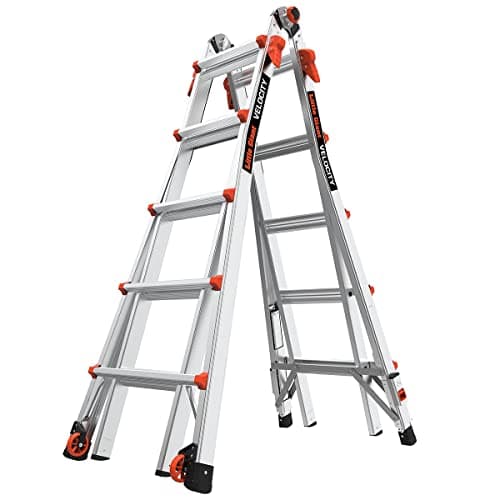
A 22-foot multi-position ladder is the reach tool that makes second-story rooflines workable, adapting to uneven ground and stair-step approaches a straight extension ladder handles poorly. For a light crew this is not a convenience purchase; it is the equipment that gets the operator to the work safely. One important note: this Velocity was listed with a future ship/availability date at capture, so it is not ready-to-ship — check the live listing first. A crew that needs a ladder in hand now can step to the in-stock alternative, the Little Giant Conquest 2.0 M22 (also 22 ft) at about $579.94 — view the Conquest 2.0 M22 on Amazon. That model was also marked in stock but scarce, so confirm before ordering.
Pros:
- 22-ft multi-position reach for second-story rooflines
- Adapts to uneven ground and stair approaches
- In-stock Conquest 2.0 M22 alternative if needed
Cons:
- Listed with a future availability date — not ready-to-ship as captured
- The in-stock alternative costs more, at about $580
- Largest line item a crew that owns a ladder can skip
7. Guardian 00815 Rooftop Safety Kit — 50 ft Lifeline
ASIN: B0032U3JXA | Price: ~$96.00 | View on Amazon

At about $96, this Guardian kit with a 50-foot vertical lifeline is the cheapest way to keep the operator working all season instead of sidelined by a fall. For a crew on rooftops, fall protection is business infrastructure on the same footing as the ladder and the cord — the equipment that lets a crew work at roofline height with a plan for a fall rather than a hope of avoiding one. The safety section below grounds exactly why it belongs in a business kit, and it is the one line item here the guide will not frame as optional.
Pros:
- 50-ft vertical lifeline for rooftop work
- Lowest-cost path to a real fall-protection plan
- Business-critical equipment, not an accessory
Cons:
- Requires correct setup and anchoring to work as intended
- One kit outfits one operator
- No substitute for a rated ladder used correctly
Spool-System Math: How Much Cord, How Close Together
The decision that shapes a job estimate is how much linear footage a house needs and how densely to space the sockets. Both Pro Christmas spools ship as 500 feet of cord, so the only difference is socket count — and the spacing that count implies.
| Spool | Published counts | Socket spacing (derived) | Reads as |
|---|---|---|---|
| 1000-socket (B0DB5Q1Q73) | 500 ft · 1000 sockets | 6000 in ÷ 1000 ≈ 6 in | Dense, premium line |
| 500-socket (B0DB5RSHSJ) | 500 ft · 500 sockets | 6000 in ÷ 500 ≈ 12 in | Cleaner, traditional |
A 500-foot cord is 6000 inches, so 1000 sockets works out to one every 6 inches and 500 sockets to one every 12 inches. Neither number is printed as a spacing spec — both are derived from the counts the listings do publish. To estimate a job, a crew measures the linear feet of eaves, ridgelines, and any wrapped columns, then decides which look the customer is paying for: the dense 6-inch line for a premium package, or the wider 12-inch run for a cleaner, budget-friendly look. Getting that measurement right before quoting is where a first-season operator earns or loses the margin on a house. For the physical how-to of running and mounting the cord, the lighting systems installation guide picks up where the buying decision ends.
The Safety Kit Is Non-Negotiable Business Equipment
The fastest way to end a first season is a fall, and the rules governing rooftop work are published and specific. This is where the Guardian kit and a rated ladder stop being line items and become the equipment a business is built on.
Start with the threshold that puts a light crew in scope. OSHA states that "OSHA requires that fall protection be provided at elevations of four feet in general industry workplaces, five feet in shipyards, six feet in the construction industry and eight feet in longshoring operations" (OSHA, fall-protection, accessed 2026-07-16). Rooftop light work sits above the six-foot construction benchmark — the relevant figure to plan against, not a light-installation-specific rule.
The ladder rules are just as concrete. On angle, OSHA specifies that "[n]on-self-supporting ladders shall be used at an angle such that the horizontal distance from the top support to the foot of the ladder is approximately one-quarter of the working length of the ladder" (OSHA 1926.1053, accessed 2026-07-16) — the 4-to-1 rule. And on getting onto the roof, the same standard requires that "[w]hen portable ladders are used for access to an upper landing surface, the ladder side rails shall extend at least 3 feet (.9 m) above the upper landing surface to which the ladder is used to gain access." Maintaining three points of contact while climbing is sensible general practice on top of those rules. A 22-foot ladder set at the correct angle with the rails extended above the eave, paired with the Guardian lifeline, turns those requirements into a repeatable daily setup.
Power planning is the other half of working safely, and it is deliberately not a roster slot here. Timers, GFCI protection, and how many LED runs can share a circuit belong to the power, timers and safety planning guide — settle those before energizing a job rather than guessing at amperage on a ladder.
The Basket, and Where Pros Buy Beyond Amazon
The honest way to frame the starter cost is as components, not a fixed price. A gear-only core — the economy spool ($248.00), the bulb pack ($79.99), both clip packs ($54.99 and $35.99), and the safety kit ($96.00) — sums to about $514.97 (derived). Add a new multi-position ladder like the Velocity ($369.00) and the all-in figure rises to roughly $883.97 (derived); a crew that already owns a rated ladder stays near the $515 core. Choosing the denser 1000-socket spool over the economy one raises the core by about $76.00 (derived). So "roughly $885" is honest as a first-season, ladder-included number — but it is a set of components whose prices vary on Amazon, not a fixed sticker.
Amazon is where most first-season crews start, but the pro tail runs deeper. As a business scales, specialty suppliers become the reorder channel: 1000Bulbs sells commercial C9 spools and bulk bulbs, HolidayLEDs carries commercial C9 lighting, and Christmas Designers is the specialty source behind the Pro Christmas spools listed here. Those are named as unmonetized pointers — where a growing crew buys beyond the marketplace, with no affiliate relationship implied. On the education side, structured installer training exists and is enrolling now: Certified Lights runs in-person courses in Dallas plus an online course, built around classroom and hands-on instruction with a commercial-sales add-on for operators who want the business side too.
Last updated: July 2026. Prices may vary on Amazon — check current pricing via the links above.
Frequently Asked Questions
Should a first-season crew run wired C9 or a pixel/animated system?
For standard residential rooflines, wired C9 is the simpler, more repairable path — bare cord plus replaceable bulbs, no controllers to learn on a customer's roof. The edge case: a crew expecting mostly animated demand from day one should tool up for that route instead, since the two systems share almost no hardware.
Which spool should be the first buy — 6-inch or 12-inch spacing?
The economy 500-socket spool (≈12-inch spacing, derived) is usually the smarter first purchase: lower cost up front and half the bulbs to fill. The denser 1000-socket spool (≈6-inch spacing, derived) is the upgrade once premium clients ask for the tighter look. Plan around the fact that the economy spool was scarce as captured and may not still be in stock at peak season.
Do the Meconard bulbs fit the Pro Christmas spools?
Both are described as C9-format, so they are in the same family, but a guaranteed brand-to-brand fit is not published. Confirm base type and voltage against the live listings before ordering in bulk — and buying a single pack to test-fit before committing to a full spool's worth is cheap insurance against a mismatch.
Is fall protection really required for rooftop light work?
OSHA sets fall-protection thresholds at four feet in general industry and six feet in construction, and rooftop work sits above the six-foot benchmark, so a real plan is not optional. The often-missed detail: height is not the only trigger — OSHA also requires protection when working over dangerous equipment and machinery, regardless of the fall distance.
Where do professional installers buy beyond Amazon?
As a crew scales, specialty suppliers become the reorder channel — 1000Bulbs for commercial C9 spools and bulk bulbs, HolidayLEDs for commercial C9 lighting, and Christmas Designers as the source behind these spools. The trade-off is minimums and lead times: those channels can price better at volume but may not ship as fast, so many crews start on Amazon and shift once demand is predictable.
What about timers, GFCI, and how many runs share a circuit?
Those depend on the specific job's circuits rather than any single product, and they live in the power, timers and safety planning guide, not this gear list. The practical caveat: the LED bulb pack here lists 0.6 W per bulb against a 4W–7W incandescent equivalence, so a crew planning around legacy incandescent wattage figures will badly overestimate the load — plan circuits against the listed LED draw.